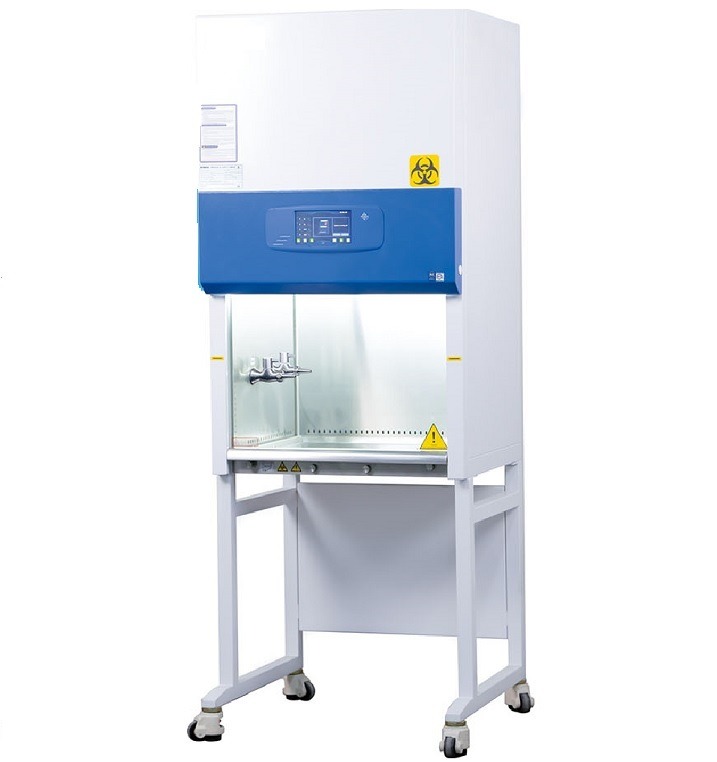
If you work with biological samples, cell cultures, microorganisms, or potentially infectious materials, you need a controlled workspace that supports safe laboratory practices. A Benchtop Biosafety Cabinet for Laboratory Applications can provide a practical containment solution while helping you use valuable laboratory space efficiently.
A benchtop biosafety cabinet is smaller than many floor-standing systems, making it useful for laboratories where space, workflow, and application-specific requirements need careful consideration. However, choosing the right cabinet involves more than checking its size. You need to evaluate its classification, airflow, filtration, working area, installation requirements, and intended use.
This guide explains what you should know before selecting and using a benchtop biosafety cabinet.
What Is a Benchtop Biosafety Cabinet?
A benchtop biosafety cabinet is an enclosed laboratory workstation designed to provide controlled airflow and containment for appropriate biological procedures. Depending on its classification, it can help protect laboratory personnel, the work being performed, and the surrounding environment.
Many commonly used biosafety cabinets rely on HEPA filtration to remove airborne particles from the cabinet airflow. The airflow pattern and filtration arrangement depend on the cabinet design and classification.
You should always identify the type of protection you need before purchasing a cabinet. A biosafety cabinet is not simply a smaller version of every other laboratory hood. Different laboratory enclosures are designed for different hazards and applications.
For example, a clean bench primarily protects the product from contamination, while an appropriately selected biosafety cabinet can provide personnel and environmental protection for certain biological procedures.
Why Use a Benchtop Biosafety Cabinet?
Laboratory space can be expensive and difficult to expand. If you operate in a compact research laboratory, clinical workspace, educational facility, or biotechnology environment, you may need a containment solution that does not occupy unnecessary floor space.
A benchtop configuration can help you create a dedicated biological work area while making better use of your existing laboratory layout.
You may consider a benchtop biosafety cabinet when you need:
- A compact biological containment workstation
- Controlled airflow for suitable laboratory procedures
- Efficient use of available laboratory space
- A dedicated workspace for biological materials
- Support for research or diagnostic workflows
- Easier integration into an existing laboratory environment
Before you select a model, make sure its internal working area is large enough for your procedures. A compact cabinet is useful only when it can accommodate your equipment, materials, and required working movements safely.
Common Uses of a Benchtop Biosafety Cabinet
The exact applications depend on the cabinet classification, laboratory procedures, and biological risk level. You should always verify that your selected cabinet is suitable for the work you intend to perform.
Microbiological Research
Microbiology laboratories often handle cultures and microorganisms that require controlled procedures. A suitable biosafety cabinet can provide an enclosed workspace with managed airflow during appropriate microbiological activities.
You should first assess the biological hazards involved and establish procedures that match your laboratory’s biosafety requirements.
Cell Culture
Cell culture work requires careful contamination control and consistent aseptic technique. A properly selected biosafety cabinet can provide a controlled environment for handling cultures, media, and related materials.
Remember that the cabinet is only one part of contamination control. Your preparation methods, cleaning practices, personal protective equipment, and laboratory behavior also influence results.
Clinical and Diagnostic Applications
Certain clinical and diagnostic procedures involve biological specimens that may present an exposure risk. A suitable biosafety cabinet can provide an engineering control for procedures that require biological containment.
You should assess the specimen type and procedure before determining which cabinet classification is appropriate.
Biotechnology Research
Biotechnology laboratories often perform specialized biological procedures during research and development. A benchtop biosafety cabinet can support certain workflows where a compact controlled workspace is beneficial.
Before purchasing equipment, consider your current procedures as well as potential future applications.
Educational Laboratories
Universities, colleges, and research institutions may use compact biosafety cabinets for appropriate instructional and research activities. A benchtop design can be useful when laboratory space is shared or limited.
For educational environments, you should place particular emphasis on operator training, supervision, cleaning, and safe operating procedures.
Key Features You Should Consider
Choosing a cabinet based solely on price or external dimensions can create problems later. You should compare the technical features that directly affect your laboratory workflow.
HEPA Filtration
HEPA filtration is an important component of many biosafety cabinet designs. It helps remove airborne particles from the airflow passing through the filtration system.
When comparing models, review the filtration specifications, filter replacement requirements, certification information, and maintenance procedures.
Controlled Airflow
Airflow is central to biosafety cabinet performance. The cabinet should maintain the airflow characteristics specified by its design and intended application.
You should avoid placing materials or equipment where they could interfere with airflow. Always follow the manufacturer’s operating instructions.
Compact Design
The primary advantage of a benchtop model is its efficient use of space. Measure your available area before purchasing and account for electrical connections, service access, clearances, and installation requirements.
Do not assume that a small external footprint automatically means the cabinet is suitable for your workflow.
Ergonomic Workspace
You may spend significant time working inside the cabinet, so ergonomics should be part of your evaluation.
Look for suitable visibility, comfortable working height, accessible controls, and sufficient internal space. A practical design can reduce unnecessary movement and make repetitive procedures easier to perform.
Easy-to-Clean Surfaces
Laboratory surfaces should be compatible with the cleaning and disinfection products used in your facility. Smooth interior construction can make routine cleaning easier.
Before using a disinfectant, confirm its compatibility with the cabinet’s interior materials and follow your laboratory’s established cleaning procedures.
Monitoring and Alarms
Depending on the model, a biosafety cabinet may include airflow monitoring and alarm functions. These features can help you identify certain operating conditions that require attention.
You should train users to understand the meaning of alarms and establish clear procedures for responding to them.
Benefits of a Benchtop Biosafety Cabinet
1. Efficient Use of Laboratory Space
A compact cabinet can help you establish a controlled workspace without requiring the floor area of a larger cabinet. This can be particularly valuable in smaller laboratories.
2. Dedicated Biological Workspace
Creating a dedicated area for appropriate biological procedures can help you organize your workflow. You can keep essential materials within a controlled working environment and reduce unnecessary movement.
3. Flexible Laboratory Planning
A benchtop cabinet may fit more easily into an existing laboratory layout than a large floor-standing system. You should still verify installation requirements before selecting the final location.
4. Support for Safer Work Practices
When correctly selected, installed, certified, operated, and maintained, a biosafety cabinet can provide an important engineering control for suitable biological procedures.
It should not be treated as a replacement for laboratory training, personal protective equipment, proper waste management, or established biosafety procedures.
5. Application-Specific Workflows
You may not need a large cabinet for every procedure. A compact unit can be useful when your laboratory needs a dedicated workspace for particular biological tasks.
This approach can help you organize specialized workflows without unnecessarily occupying additional laboratory space.
How to Choose the Right Benchtop Biosafety Cabinet
Start by identifying what you will handle inside the cabinet. Consider the biological materials, procedures, potential aerosol generation, and level of protection required.
Next, determine the appropriate cabinet classification. You should never select a biosafety cabinet simply because the product description contains the word “biosafety.” Different classes and configurations provide different types of protection.
Evaluate the following factors before making your decision:
- Biological materials and procedures
- Required containment level
- Internal working dimensions
- Available laboratory space
- Airflow configuration
- Filtration system
- Electrical requirements
- Noise considerations
- Maintenance access
- Certification requirements
- Replacement filter availability
- Supplier support and technical service
If you are uncertain about your requirements, consult a qualified biosafety professional or laboratory equipment specialist.
For laboratory equipment sourcing, you can explore Global Lab Supply Laboratory Equipment to review available laboratory solutions.
Installation and Placement
Correct placement is essential for reliable cabinet operation. Air movement caused by doors, personnel traffic, fans, vents, or other equipment can interfere with airflow.
Before installation, review the manufacturer’s requirements for clearances, utilities, service access, and room conditions.
You should also ensure that the cabinet is installed and certified according to applicable requirements. Certification can help verify that the cabinet is functioning according to its specified performance criteria.
If you relocate the cabinet, determine whether recertification is necessary before using it again.
Safe Operating Practices
A biosafety cabinet can support safer laboratory work, but you still need to use it correctly.
Before beginning work, receive appropriate training and understand the manufacturer’s instructions. Keep the work area organized and avoid blocking airflow grilles.
Bring only the materials you need into the cabinet. Excessive clutter can interfere with airflow and make procedures harder to perform.
Clean and disinfect appropriate surfaces according to your laboratory’s established procedures. Dispose of biological waste using the required facility protocols.
You should also maintain records for certification, maintenance, filter replacement, inspections, and other required service activities.
Biosafety Cabinet vs. Laminar Flow Hood
Biosafety cabinets and laminar flow hoods can look similar, but they serve different purposes.
A laminar flow hood generally provides a clean airflow environment intended primarily to protect the work or product. A biosafety cabinet is designed for biological containment and, depending on its classification, can provide personnel and environmental protection.
You should therefore avoid choosing between these systems based only on appearance or price.
First determine whether your application requires product protection, personnel protection, environmental protection, or a combination. Then select equipment designed for that requirement.
Maintenance and Certification
Regular maintenance is essential for reliable cabinet performance. You should follow the manufacturer’s recommendations for cleaning, filter inspection or replacement, certification, and servicing.
Certification requirements can vary according to cabinet type, application, standards, and facility policies. Certification may also be necessary after installation, relocation, or certain repairs.
Keep maintenance and certification records organized so you can demonstrate that the cabinet is being managed appropriately.
Common Mistakes to Avoid
When selecting or using a benchtop biosafety cabinet, avoid these common mistakes:
Choosing based only on size: A compact cabinet may not provide enough working space for your procedures.
Ignoring placement: Nearby airflow disturbances can affect cabinet performance.
Using the wrong cabinet type: A biosafety cabinet is not interchangeable with a chemical fume hood or clean bench.
Overloading the workspace: Excessive materials can interfere with airflow and reduce working efficiency.
Skipping certification: Proper certification is an important part of confirming cabinet performance.
Neglecting training: Users need to understand correct operating procedures before working with biological materials.
Final Considerations
A Benchtop Biosafety Cabinet can be a valuable addition to a laboratory when you need a compact and controlled workspace for appropriate biological procedures. Its smaller footprint can help you use laboratory space efficiently while supporting organized workflows.
However, the right choice depends on your biological materials, procedures, required protection, cabinet classification, workspace, installation conditions, and maintenance needs.
Before purchasing, compare technical specifications rather than relying only on product size or price. If you need assistance selecting laboratory equipment, use Contact Global Lab Supply for Expert Assistance to discuss your requirements.
With appropriate selection, installation, certification, training, and maintenance, your biosafety cabinet can become an effective part of your laboratory’s overall safety and workflow strategy.
Frequently Asked Questions
1. What is a benchtop biosafety cabinet?
A benchtop biosafety cabinet is a compact enclosed workstation designed for appropriate biological procedures. Depending on its classification, it can provide controlled airflow and help protect personnel, laboratory materials, and the surrounding environment.
2. What are the main uses of a benchtop biosafety cabinet?
You can use an appropriately selected cabinet for applications such as microbiological research, cell culture, certain clinical procedures, biotechnology research, and educational laboratory activities involving suitable biological materials.
3. Is a biosafety cabinet the same as a laminar flow hood?
No. A laminar flow hood primarily protects the work or product from contamination. A biosafety cabinet is designed for biological containment and can provide additional personnel and environmental protection depending on its classification.
4. How do you choose the right biosafety cabinet?
Start by assessing your biological materials, procedures, required protection, cabinet classification, workspace, airflow requirements, certification needs, and maintenance requirements. Consult a qualified biosafety professional if your application is uncertain.
5. Does a benchtop biosafety cabinet require certification?
Yes, appropriate certification is an important part of biosafety cabinet management. Requirements vary according to the cabinet, application, standards, and facility policies. You should follow manufacturer recommendations and applicable institutional requirements.